




Authors: 1) Mr. Naman Jain, and 2) Ms. Richa Agarwal

Computable General Equilibrium Modeling has played an important role in understanding the real dynamic nature of the policy shocks so introduced in the real-time economic simulation of the economy.
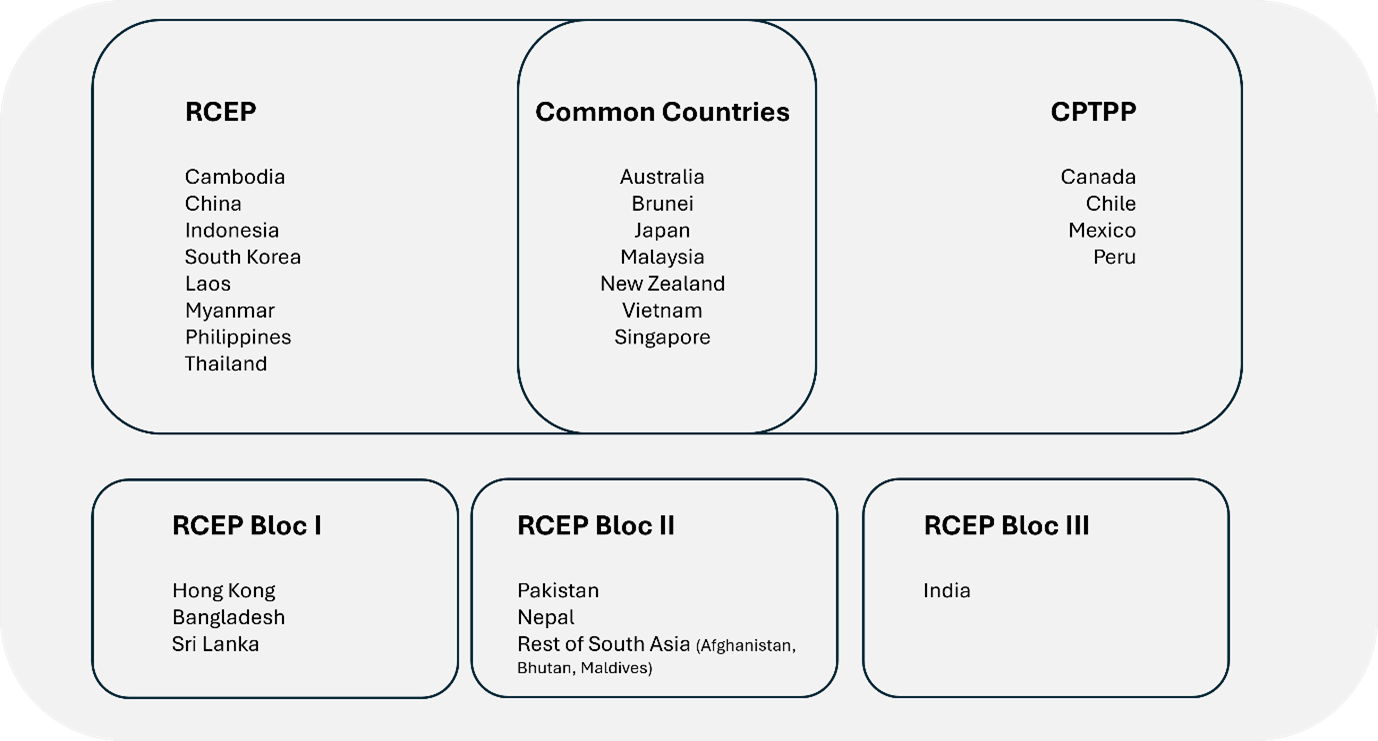
Here, we will present the scenario modeling of the effects of India joining the RCEP agreement that includes all current members as well as the members of the CPTPP and South Asian countries such as Afghanistan, Bangladesh, Bhutan, Maldives, Nepal, Pakistan, and Sri Lanka. United Kingdom was also introduced in the CPTPP members’ group. All these members are assumed to have already removed tariffs on members, so the result show isolated effect of India’s entry.
Source: EABER (ANU), NITI Aayog (India), and CSIS (Indonesia)
ASEAN negotiated the RCEP to broaden and deepen ASEAN’s engagement with its FTA partners namely Australia, China, India, Japan, Republic of Korea, and New Zealand. ASEAN’s economic dynamism has expectedly benefited from RCEP that provided a basis for broader regional integration and helped address concerns about the noodle bowl’s effect of overlapping bilateral and regional agreements. When concluded, RCEP is delivering tangible benefits through potential improvements in market access, more coherent trade facilitation and regulatory rules and cooperation. In turn, this provided more choices and opportunities for ASEAN people to gainfully participate in global value chains.
Covering the core areas of negotiation to include trade in goods, trade in services, investment, economic and technical cooperation, intellectual property, competition, dispute settlement and other relevant issues, RCEP has been envisaged to be a modern, comprehensive, high-quality and mutually beneficial economic partnership agreement. Negotiations commenced in RCEP agreement built the advances made under the ASEAN+1 FTAs and have been delivering credible and balanced outcomes, recognizing the individual and diverse circumstances of the participating countries.
India withdrawing RCEP (before joining; was part of the talks) has led to seismic shocks among the RCEP member countries. India is one of the largest economy and biggest emerging markets in the world. India possesses opportunities beyond summations. Contradict to opportunities, India has always been invaded throughout its history. The opportunities through RCEP felt like an invasion of economic resources and allocations. The illiteracy rate of the country remains significantly high with literacy and knowledge extending to the limitations set by the course-books and syllabus of various competitive examinations in the country. It has been upon the handful who serve, drive and protect this great country, India.
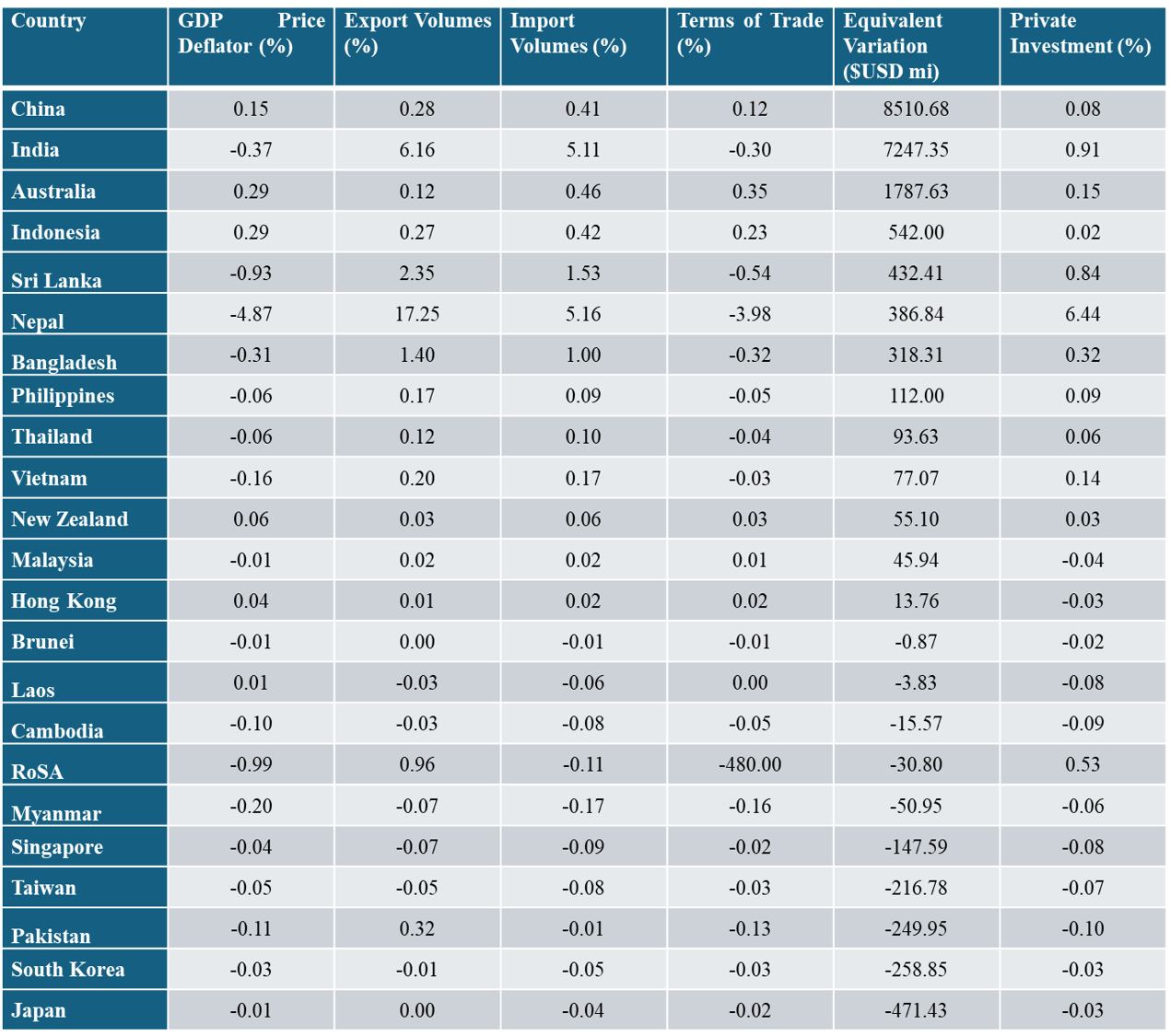
India is a labor-intensive economy. India’s joining of the RCEP holds the potential to benefit both skilled and unskilled workers through an increase in real income. This rise in real income could contribute to the enhancement of human capital-formation, leading to acceleration of the share of the manufacturing sector in the GDP. As merchandise exports would strengthen, India could likely experience an influx of the foreign exchange which could improve the current account deficit. This improvement would help India reduce the fiscal deficit and strengthen the financial account outflows (lending to foreign countries). However, imports would also increase and, therefore, the country should maintain a balance between exports and imports to ensure favorable terms of trade (ToT) which can achieved by effective trade and fiscal policies.
India’s joining would pave the way for the RCEP member countries to improve access to Indian markets for goods and services. At the global level, enhancement of global value chains among the member nations could lead to a rise in exports. Foreign investments in India would likely increase employment opportunities, infrastructural development, technical know-how spillovers, and research and development that would accelerate the growth rate of the economy. This regional cooperation would act as a buffer through the strong integration between the member countries such that any economic upheaval by non-member countries would not distort the terms of trade (ToT) of the member nations.
Computable general equilibrium modelling is a simulation-based study and analysis of the scenarios building. The results, merely, are simulative based on the input-output tables of the countries of the world compiled by the Global Trade Analysis Project (GTAP), Purdue University. In this research-based study of India joining RCEP with implementation of zero tariffs among the RCEP members, South Asian countries, CPTPP members, and India. These results show that India could have potentially joined RCEP with little to know about the aftermath while playing God for its citizens.
Source: Authors’ Compilation
This blog post is jointly authored with Ms. Richa Agarwal, Postgraduate Student, Gokhale Institute of Politics and Economics, Pune, India.
 Naman Jain